Friday, September 25, 2015

Shalom in the Home

I tend to speak less about issues of personal relationships and instead address big topics of society, politics and economics on this blog. The main reason for that is that I believe Christians have, by and large, actually put a lot of good thought into how following Jesus should play out interpersonally. We have done a much weaker job (due to, among other things, some reductionistic modern/Western/post-Reformation thought) of parsing through the political (in the broad sense) implications of our faith.

But I'm about to get married in two weeks to that radiant woman in the picture there, so thought I would share a little reflection on how shalom matters in our relationship.

The last blog post was based on the study of Colossians I have been doing this past year. But the reason I have been in Colossians wasn't for all the big scale, anti-empire implications it holds--it was as preparation for marriage (which has a lot of those implications too, but that's for another day).

Libbey and I chose Colossians 3:12-17 as the verse to carry us through engagement and into matrimony, and have read/reflected on this passage a hundred times this year.
As God's chosen ones, holy and beloved, clothe yourselves with compassion, kindness, humility, gentleness, and patience. Bear with one another and, if anyone has a complaint against another, forgive each other; just as the Lord has forgiven you, so you also must forgive. Above all, clothe yourselves with love, which binds everything together in perfect harmony. And let the peace of Christ rule in your hearts, to which indeed you were called in the one body. And be thankful. Let the word of Christ dwell in you richly; teach and admonish one another in all wisdom; and with gratitude in your hearts sing psalms, hymns, and spiritual songs to God. And whatever you do, in word or deed, do everything in the name of the Lord Jesus, giving thanks to God the Father through him.
Right in the middle of these verses is Paul's most fervent hope for his readers...
Let the peace of Christ rule in your hearts.
This is what we yearn for and yet find it can be so illusive, even between two people who love each other so passionately. If peace is not being made here, can we really expect much to be happening out there?

We have found that there are some big time nuggets of wisdom crammed into this short passage. Together, they point the way toward letting Christ's shalom rule over our marriage--and possibly beyond. I hope they bless you today for whatever relationships you find yourself in.


Identity 

This way of life flows from who we are "as God’s chosen ones, holy and beloved," and out of our new identities in Christ (referenced earlier in Col). The beginning of wisdom is knowing who you are in relation to God--which is just another way of saying "the fear of the Lord." From this, we live in dependence on him and interdependence with each other plus the rest of humanity and creation. These are the roots for everything else!

Comprehensive Words

If we could hold fast to the words in these verses--gentleness, kindness, patience, compassion, humility, gratitude, forgiveness, love--I think that would pretty much cover things. It's easy for the eyes to skim over them, but there are miles of depth in each. Imagine actually taking these seriously, every day, in every interaction! It boggles the mind and proves how far beyond our brokenness are the ways of God. And for this, we return to the above--our identities in Christ--and pray to him for the grace and strength to bear such lovely fruit towards one another.

A Daily Choice

Tim Keller says he laughs when people come to him and say, but love shouldn't be this hard! "Why not?" he replies, "Does a major league baseball player expect it to be easy or natural to hit a fast ball?" Nothing of true worth or meaning is automatic. Neither is living out the rhythms of God's shalom toward one another.  By saying that we need to clothe ourselves in these virtues, Paul implies that they won't just become our natural self. It will have to be a continual, daily, minute by minute choice to express kindness, react in gentleness, listen with patience, suffer with one another compassionately, hold oneself with humility. 

Gratitude and Forgiveness

This coupling seems particularly key for acquiring a shalom-esque disposition. These words--including the particularly thought provoking phrase "bear with"--appear more times in this passage than any other. Just chew on the difficulty and magnitude of actually living in gratitude and forgiveness. It shuts me up!

Love

"Binds everything together in perfect harmony." An idea so big it penetrates to the center of the earth, passes straight through the soul, and takes in the whole cosmos. Love. There are fathomless depths in this word. It offers both a means and an end. Its complexity is made all the more bizarre and radical by a Savior who challenged his followers to extend its intimate embrace to their enemies, and who told us love was epitomized in God strung up bleeding on a Roman cross. 

Inwards and Outwards

Biblical peace just doesn't work as private property. Our home can't be a place of shalom unless its flowing out the doors, pipes and windows. We want this to be our way of life both with one another and with the rest of the world. Marriage, we think, is both a main event in and of itself, and a training ground for service in the world. It is a context of discipleship, an incubator in which to become more like Jesus so that when we walk out these doors we are people who love justice, do mercy, and walk humbly with our God. All of these principles hold as much weight between Libbey and I as they do when considering matters of city zoning policy or our disposition toward an ISIS militant. Such is the precipitous vocation of a Christian.


That's all I have to say on that. I've been married for negative fifteen days and am already failing at each of these daily. To those of you who have some years of marriage under your belt, please shower your wisdom on us! And to all of you, we would cherish your prayers as we embark on this glorious adventure.

Sunday, September 13, 2015

Searching for Peace

This article originally appeared in Christian Leader magazine and can be viewed here. 


Peaceful protests in Baltimore.

At the climax of his message to the Colossians, you can almost feel Paul lift out of his seat to deliver his central charge, “Let the peace of Christ rule in your hearts, since as members of one body you were called to peace!” (Col 3:15)

We still crave these words today. To be a people of peace. To just experience peace for ourselves. For Christ to rule. 

But what does it mean to be at peace? Can we have peace in our hearts if there is not peace in our world and our relationships? We must be careful here. Jeremiah once called his people to task for claiming such things carelessly. “‘Shalom, Shalom’ 'ayin shalom,” he wept. “They dress the wound of my people as though it were not serious. ‘Peace, Peace,’ they say, but there is no peace” (Jeremiah 6:14). 


The Apotheosis of Washington, painted on the underside of the US Capital dome.

Whose Peace Reigns in Colossea?


The Colossians weren’t foreigners to false claims and poorly attended wounds. They lived under the Pax Romana, an imperial peace imposed through military and economic domination. Rome declared that her rule marked a glorious new age, one upon which the blessings of the gods rested. All who lived within her sphere and bowed to Lord Caesar would find peace. 

Paul drops the letter of Colossians into this context with an alternative story that took off like a subversive virus. With Jeremiah, he rejects the empire's claims to peace when there is no peace. The story Rome has told is false! All have not found peace here. The wealth of a few is built on the backs of many. Some are privileged while others suffer as slaves. 

In a world where the image of Caesar was printed on everything from money to city gates to cutlery as a reminder of who was King and god, Paul declared a different Lord:
“He is the image of the invisible God, the firstborn of all creation. For by him all things were created, in heaven and on earth, visible and invisible, whether thrones or dominions or rulers or authorities—all things were created through him and for him. And he is before all things, and in him all things hold together.” (Col 1:15-17)
Jesus--the one Rome tried to kill on a cross--is the resurrected King, the true image of God, the creator of all the world Caesar claims as his own. In place of a false peace, Jesus redefined the means of salvation. Instead of military conquest, he made peace through radical self-sacrifice.
For in him all the fullness of God was pleased to dwell, and through him to reconcile to himself all things, whether on earth or in heaven, making peace by the blood of his cross. (Col 1:19-20)


militarized peacekeping

Be Reconciled...Justly


For Paul, the truth of Jesus has implications across every dimension of creation: individual, family, church, communal, societal, even ecological. All things are being made new, and we get to have a role in it! But once again, he doesn’t dumb down the difficulties of entering this new world. 

This draws us back around to a central question: what exactly is the anatomy of peace? Steeped as he was in scripture, Paul’s thought clearly reflects that most freighted word of the Hebrew language: shalom. 

When Paul talks about the “peace of Christ,” he is talking about shalom.

While Rome’s peace was based on allegiance to the emperor, shalom begins with first commandment faithfulness: to have no other gods beside Yahweh (Ex 20:1-3). This is the main reason why Paul instructed the Colossians to turn from sexual immorality. These acts were associated with pagan worship practices, which, as Paul succinctly reminds his readers, “is idolatry” (Col 3:5). There is no peace without the worship of God.

While Rome’s peace only benefited a few, shalom is a fundamentally communal experience. If anyone in the community is excluded, shalom is broken for all. “Shalom is always tested on the margins of a society and revealed by how the poor, oppressed, disempowered, and needy are treated” (Randy Woodley, Shalom in the Community of Creation: An Indigenous Vision). In the words of Walter Brueggemann, “shalom is never the private property of the few.”

While Rome’s peace was based on social hierarchies and systems of oppression, shalom emerges where systems are just and relationships are reconciled. 

Colossae sat on a key trade route through the Lycus Valley in Asia Minor. Diverse peoples from all over the empire called it home. Cultural differences and power differentials made for a relationally fragmented society. Paul could not simply encourage them to cozy up next to one another and work things out. 

Rather, God’s shalom lifted them out of injustice, and reconciled them into Jesus where they discovered a new way of life with one another. Their former selves and social mores could not facilitate true community. “For you have died, and your life is hidden with Christ in God” (Col 3:3). Instead, they would learn to be one Church through their shared identity in Jesus.
“Put on the new self, which is being renewed in knowledge in the image of its Creator. Here there is no Gentile or Jew, circumcised or uncircumcised, barbarian, Scythian, slave or free, but Christ is all, and is in all.” (Col 3:10-11)


Jesus in the Breadline, Fitz Eichenberg

A Daily Vocation


The truest thing about our world is that Jesus Christ is Lord, firstborn from the dead, creator of all things, making ALL things new. Therefore, writes Paul, live like it!

Colossians 3:12-17 walks a well-worn Old Testament tradition. The most common Hebrew word pairing is mishpat and sadiqah (e.g., Jer 22:3-5; Isa 28:17-18). The first word relates to justice in society and the second to personal righteousness. The two are continually held together in the biblical imagination. Paul follows this vein in his instructions for Christian living. The Jesus-ethic he describes forges an intimate marriage between personal holiness and social justice. It is, therefore, a powerful weapon against the divisions and oppression which continually encroach on the people of God. 

What does it look like to have died to self and come alive to Christ in normal life? 

Paul says it is to have compassion, literally to “suffer with” one another. It is to commit to the Christ-like, self-sacrificing, listening postures of kindness, humility, meekness and patience (Col 3:12). When differences and difficulties flare up, Paul urges to “bear with one another,” and live not in perfection, but in forgiveness (v13). And finally, that glorious thing which cinches everything together, “put on love” (v14).

“Clothe yourself” in all of this, we are told (v12). The power of the Empire will keep trying to creep in. Each day you must re-dress yourself in these virtues, remembering that you are God’s beloved people.


In the following of Jesus there is a path for peace that does not make light of present pain. A peace that lets us join with the great Southern preacher William J Barber II, singing “to pain and problems and suffering and racism and injustice, ‘You may be real, but you are not the final reality. There is another hope! There is a resurrection!’”

Tuesday, August 18, 2015

Presidents and Poverty: Swapping Lenses

Well-bearded John and Leo say: "Thou must first look at the system to understand thyself."   

John said to the crowds coming out to be baptized by him, "You brood of vipers! Who warned you to flee from the coming wrath? Produce fruit in keeping with repentance. And do not begin to say to yourselves, 'We have Abraham as our father.' For I tell you that out of these stones God can raise up children for Abraham. The ax is already at the root of the trees, and every tree that does not produce good fruit will be cut down and thrown into the fire."
    "What then should we do?" the crowd asked.
    John answered, "Anyone who has two shirts should share with the one who has none, and anyone who has food should do the same."
    Even tax collectors came to be baptized. "Teacher," they asked, "What should we do?"
    "Don't collect any more than you are required to," he told them.
    Then some soldiers asked him, "And what should we do?"
    He replied, "Don't extort money and don't accuse people falsely--be content with your pay."
         - Luke 3:7-14

I sit on a man's back, choking him and making him carry me, and yet assure myself and others that I am very sorry for him and wish to ease his lot by all possible means--except by getting off his back.
         - Leo Tolstoy, What Then Must We Do? (1886)

(This blog is in a series discussing the responses made by presidential candidates on their plans to address poverty and hunger. For more on that background go here.)


Swapping Lenses


Every now and then, I open up my iPhone to try and take a picture of something amazing in front of me, and am terrified when instead my own ugly mug pops up staring back at me.

I think something similar has happened in our culture over the past several centuries. We've been trying to get a good picture of the world, to really understand how and why it works the way it does, by snapping increasingly detailed pictures of ourselves.

Rene Descartes is often trotted out as an original instigator of this curious mode of thought. Doubting the truth of anything in the external world, he crawled inside the sensory deprivation tank of his kitchen oven to block out everything but himself. In that moment, he arrived at the infamous maxim: "Cogito ergo sum" - I think therefore I am. Me. That is the first and ultimate truth. My "i"Phone agrees.

Perhaps it started much sooner. Perhaps it began in 1442 when Portugal had the first forced European encounter with Africans on European soil. Like a good Christian, the King made sure to tithe on his new property. He sent several of his black-bodied slaves to work for the Church, and congratulated himself for his faithfulness.

Surely they must not have been looked beyond themselves in such a moment. If they did, they would certainly have seen the tears and anguish flowing down human faces made in the image of God.

Galileo and Newton might be "blamed" for institutionalizing the individualistic, self-focused point of view with the holy seal of scientific methodology. The new physics said if you really want to understand something, you have to isolate it from everything else and quantify its characteristics. Only by being as individualistic and "objective" as possible can we truly comprehend the world. Unfortunately, individualism and so-called-objectivity were only able to lead us back into ourselves and construct a view of the world that agreed with who we saw ourselves to be.

These days, something incredible is happening behind the scenes, off-stage of our reality tv politics and consumer culture.

A new paradigm in thought is taking the place of this old worldview. People are calling it a "second Enlightenment," a new Copernican Revolution.

Eric Liu and Nick Hanauer summarized these as a series of shifts:
Simple --> Complex
Atomistic --> Networked
Equilibrium --> Disequilibrium
Linear --> Non-Linear
Mechanistic --> Behavioral
Efficient --> Effective
Predictive --> Adaptive
Independent --> Interdependent
Individual ability --> Group diversity
Rational calculator --> Irrational approximators
Selfish --> Strongly reciprocal
Win-lose --> Win-win and lose-lose
Competition --> Cooperation 
Why am I talking about this, and what does it have to do with addressing poverty?

Because they way we think about the world massively influences the way we create the world. And the way we assess the world completely determines the analysis we provide.

The old worldview taught us to look at individuals, to see things piecemeal, to think "mechanistically" and "atomistically." The new worldview draws us to examine the system.

In the old worldview, we (and by we I mean white people--particularly white, male Christians like myself) looked at ourselves as the starting place for truth and morality. We looked at those who weren't like us as the problem.

The great systems theorist Donella Meadows explained that if a person can make the shift, when something goes awry, "You'll stop looking for who's to blame; instead you'll start asking, 'What's the system?'"

It's time to turn the camera around.


It's the System, Stupid


In the US, something has gone unequivocally wrong. Inequality is soaring to the highest levels it's every reached. Millions of children go to bed hungry in the richest nation the world has ever seen. Simply affording a place to live is increasingly out of reach for a fast growing portion of the population.

Why is all this?

Meadows gives the example of a slinky.

If you put the two ends of a slinky on your hands and move them up and down, it bounces around and sends ripples from one end to another.

Why does it do this? Because you moved your hands up and down?

If you placed a book on your hands and moved them you would find the book react quite different, so that can't be the whole answer.

Rather, Meadows explains, "The answer clearly lies within the slinky itself. The hands that manipulate it suppress or release some behavior that is latent within the structure of the spring. That is a central insight of systems theory. Once we see the relationship between structure and behavior, we can begin to understand how systems work, what makes them produce poor results, and how to shift them into better behavior patterns."

So, why do we have poverty and hunger in this nation?

The first answer I want to suggest in this little blog series, as a direct challenge to the answers provided by almost every candidate for presidency, is that the causes of poverty and hunger lay within the structure of our system. And this structure lies far deeper than the difference between free-market capitalism aimed toward unrestrained growth prized by conservatives since Reagan and more government managed capitalism aimed toward unrestrained growth of liberals. Both operate within the same basic paradigms, and neither delves deeply enough to see the root causes. The roots lies in our histories, in the stories that guide us, and in the structures that often stay hidden behind the surface even while they form the rules and boundaries of our lives.

Consciously or not, the system is designed to produce the results we've gotten.

As a student of equitability and sustainability, I believe these outcomes are severely damaging to the health of every aspect of our nation: the rich, the poor, the middle class, the environment, our farmlands, and our cities. As a Christian, I find these outcomes morally reprehensible. We stand at a pivotal moment in history, one that requires us to begin to imagine and work toward a different system.

When we stop looking in the mirror for answers--when we start to listen to the voices of the suffering and allow their cries to lead us--we may return asking that same old question: what then must we do? And we might find ourselves wrestling with answers quite similar to John's and to Tolstoy's.

Moving forward, this systems lens will be a primary starting point for me in examining the candidate responses.

More on that to come.

Tuesday, August 11, 2015

Presidents and Poverty

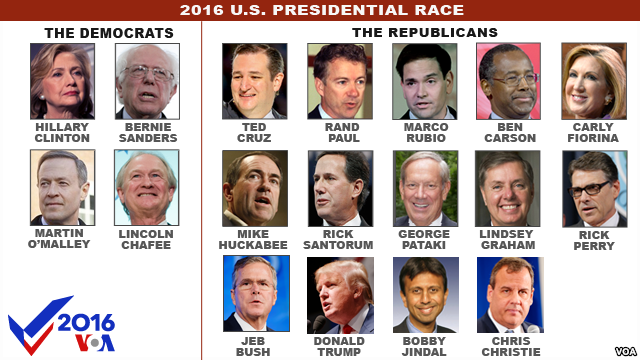
You might of caught the first GOP candidate debate last week, but have you heard their thoughts on poverty?

The request was simple: as Christians, the fate of the vulnerable matters to us a great deal. In this nation and around the world, a plurality of our neighbors are suffering from poverty and hunger. If you--Mr. or Mrs. Presidential Candidate--were elected, what would you do to put an end to these social injustices?

Great question!

It came from a group called the Circle of Protection composed of over 100 prominent Christian leaders from across ever major branch of our faith.

They asked each Presidential candidate to reply with a 3 minute video explaining their platform on the issue. To my great pleasure, eight of the prospective Commander-in-Chiefs responded and four more have promised to do so. At the moment, we have videos from Jeb Bush, Hillary Clinton, Ben Carson, Ted Cruz, Carly Fiorina, Mike Huckabee, Martin O'Malley, and Bernie Sanders. Lindsey Graham, Rand Paul and Marco Rubio plan to send there's in soon.

The Sojourners website has the best spot to watch them. Go here to check 'em out:


No surprise, but I'm all for the effort to make poverty reduction a central issue for assuming political leadership of this nation. As their document says, the biblical concept of governing is steeped in the assumption that a ruler's job is to safeguard the vulnerable. The Circle of Protection website quotes Psalm 31:8-9:
Speak out for those who cannot speak, for the rights of all the destitute. Speak out, judge righteously, defend the rights of the poor and needy. 
Bear in mind that this Psalm was not written as a charge for the Church, it was written by and for a king. Obviously there are significant differences between a theocracy like Israel with its anointed ruler and a modern democracy like ours, but the point stands: if you go looking for the bible's central expectation for government leadership, it consistently returns to safe-guarding the poor and marginalized.

Since I dabble in this world, I thought it would be fun to post reviews of each video and provide my assessment of the candidates' theories and plans.

I don't write as an expert on the policy histories of any of these folks. I am not an economist, and I certainly don't claim to have figured out how to "solve poverty." But I have been engaged in life and ministry with the poor for about a decade now, am one thesis paper short of a Masters degree in Urban Ministry, have read piles of books, and I have enough of a radical angle on this stuff to make things interesting.

Some things to look for:
  • What diagnosis does the candidate offer (explicitly or implicitly) for the cause(s) of poverty? Said another way, what is the candidate's theory of poverty?
  • How do they seem to view the poor? As people to be pitied? As charity cases? As criminals? As the 'noble poor'? As responsible for their own fates? As victims of broken systems? As homogenous or heterogenous?
  • What connections does the candidate make between poverty and other issues?
  • Does their plan do anything to address issues of power imbalance?
  • What exactly IS their plan? Do they actually offer one?
  • How does the candidate relate to the poor? Do they show any signs of listening to the poor and allowing their perspectives to shape or lead the candidates platform?
  • Do they lean toward a focus on individuals or systems/structures?
  • Do they explain how their plan will practically serve to eliminate poverty? 
  • How central is this issue to their presidency?
  • Do you see genuine, action and relationship oriented compassion in them?
  • What political, ideological, cultural, economic, philosophical, or theological precommitments might be shaping the candidate's position?
What other questions should we be asking?

Excited to dig in over the next couple weeks!

Wednesday, July 22, 2015

Reboot!


3 months since the last blog post?! Time to get back in the saddle.

The past few months have been packed with finishing my final courses for seminary, travels around the country, a week at Duke Divinity School's Summer Institute in Reconciliation, moving to Berkeley, CA and an 11 day backpacking trip in the Sierras.

It has been a full yet surprisingly refilling time. God has been hard at work rejuvenating my spirit. After two years of seminary, two years in a strange city/state, and two years of long distance from my fiancee Libbey, it was some much needed rejuvenation. My heart feels lighter and my passion is restoked for the work of the Kingdom!

Looking Forward

From now until I graduate next May, I will be working on my grad school thesis. The working title at the moment is Urban, Rural, Wild: Place and the Mission of God. At the very least, that subtitle will change. Some alternatives I'm playing were are "Landscapes of Life and Imagination"; "Landscapes of Oppression, Landscapes of Justice"; "Cultivating the Shalom Imagination"; "Shalom and the Community of Creation." We'll see :)

It is a wide ranging, interdisciplinary project that is attempting to situation cities in their geographic, ecological, historical, structural, and philosophical contexts. The basic point is that you can't understand a city by just thinking about the city. You have to see it in its relationship to the other primary "placial regions" (as I refer to them): rural/agrarian areas and the wilderness. Systems thinking and the science of ecology (as well as biblical/Hebraic thought, I might add) emphasize that you understand something best not by studying it in isolation, but by observing its relationships with the surrounding environment. Furthermore, we have to see the way that these distinctions are all things humans create. We impose a landscape of civilization on top of the Land: the ecological world of soil, water, plants, animals, and atmosphere. The way we humans make the world emerges from our worldviews.

My goal is to try to understand the underlying philosophies behind the way urban, rural and wild places have been formed through American history and assess to what degree this construction aligns with the ways of God. The trick to a good analysis, however, is not just looking at how the system has worked but paying close attention to the glitches, the casualties of our history and our present. This has led me to prioritize two primary perspectives in my research: 1) the marginalized and 2) the ecological. Indisputably, many people have been oppressed--enslaved, impoverished, displaced, dismissed, and even killed--through the manner the US pursues its corporate life. Their perspectives on our history and on the problematic elements of our worldview are therefore essential for uncovering our base problems. Secondly, creation has been altered and destroyed more rapaciously in the history of this country than anywhere else in the world. So, strange though it may sound to most modern ears, I will also be listening to what the land has to say.

In the end, I hope to be able to offer some theological convictions and fairly concrete political and missional advice for Christians in this country whose allegiance is more to Jesus than any economic theory or political party.

Since these are the things I will be thinking about, these are the things I plan to write about. Hopefully I can use this blog to hash through the ideas I want to unpack in my thesis. I'm told that it's bad blog etiquette to not stick to a niche, but too bad. If you are following along over the next year, expect to read posts on stuff like:
  • the history of urban development in the US
  • alternatives in farming, agricultural life and food systems
  • the idea of wilderness and its function in American life
  • a theology of creation far more related to its present than its origin
  • the nature of "whiteness" and how it jacks up everything/everybody
  • theories of modernity and postmodernity
  • economics as if the poor and the planet mattered
  • and a lot more!
My commitment is to make a post every two weeks at a minimum. That said, God is up to remarkable things and my brain is on fire, so it could be a lot more! To keep from pinning myself down, I won't necessarily proceed in any logical order, but will wander through subjects as they flow.

My prayer is that as you read, you find your imagination whipped up around topics you've never thought about before, that you discover God cares immensely about those things, and that through the "transforming of your mind" you find your self gradually caught up in a new, more beautiful, more Christlike way of being-in-the-world. Let us turn a blind eye toward the victims of our world no more. Instead, let us begin to dream and enact together a world designed for shalom.

Looking Back

For the two people who have been reading along from the beginning (thanks Mom and Libbey), I thought I would also briefly look back to tie up some loose ends.

In the very first post, I claimed that I was going to focus on leadership, and I even introduced something with a silly title called "12 Non-Exhaustive Principles for Leading to Shalom." When I started this blog, I had just finished a class called Leading Multicultural Communities. My mind was all wrapped up in the thoughts of my final paper, and I thought this blog would be a place to keep exploring them. Well, it was for the first couple months, but we all have to move on. I never came back to the "12 Principles," and honestly at this point I don't think they're that great, so I never will. And that's that.

Tied to those thought processes back at the genesis of this thing, there's another problem that's been chewing at me about this blog: the name. Since leadership was on my brain, I called this blog "Leading to Shalom." What nags at me are how many connotations--many starkly unChristian--the language of leadership dredges up. This blog is not supposed to be about how great a leader I am, or even about forming really amazing people into leaders for the Kingdom. Those images are too self-focused, too top down, too individualistic, too powerful in the ways of the world, too lacking the servant-hearted, sacrificial spirit of Jesus on the cross. 

If there is an aspect of "leading" I hope to conjure, I would rather it be that God is leading all of history toward shalom. That is the central reality behind everything. And as the followers of God, we get to come alongside him in this effort. It is not we who will make his Kingdom come on earth as it is in Heaven, but our Father. So, that said, I might change the name/address of this blog down the road.

The other unfinished mini-series started back at the beginning of March and flowed out of this model for shalom-oriented life I tried to draw up. Content wise there's a lot I still like about it. However, as I kept thinking about it over the past few months, problems kept cropping up.

First, it was too static. I knew there were things that weren't explicitly represented and I couldn't figure out an elegant way to solve that problem. Second, even though it wasn't meant to, the diagram felt to linear. Each layer was only connected to the pieces right above and below it. There was no room for circling around through the different elements, for moving back and forth, for all the nonlinear complexities of real life. On this side of eternity, seeking shalom is always a process and a journey of approximations--there is no one formula. That was obscured by my straight edged drawing. Third, though following Jesus was the bedrock, it still didn't feel Christocentric/Theocentric enough for me. While God was everywhere in all of it, that didn't seem to permeate the picture enough. Finally, any image carries with it symbolic, metaphoric meaning. My fairly happenstance choice of classic Greek architecture really had nothing to do with the deeper meanings I wanted to convey, and so was a distraction and detraction from my goal. Christian thought has been entangled with Platonic and Aristotelian ideas quite enough without me bringing in their subliminal messaging, thank you very much!

As I've fiddled with ecological thought, I see a lot of potential there to rework my model. Organic systems have the ability to intake and discharge elements while maintaining the equilibrium and health of the whole (something that wouldn't work so well if you yanked one of my pillars out of the old version). I think some kind of network, web or flow-diagram might be a better way to arrange my ideas (picture charts of a food web or the water cycle). But we'll see. If I come up with anything, I'll post it here. So, while I thought was going to unpack all the different elements and subelements of that picture for quite some time, I'm going to leave it to behind for the moment.


Thanks for engaging, and looking forward to wrestling through a lot more with you in the days ahead! Shalom, friends.

Monday, April 27, 2015

Which Economy Will You Choose?


(This blog was first published at www.sayhelloadvertising.com/blog. It's an amazing business providing work opportunities and professional growth to folks in the Fresno, CA inner city...check it out!)


Work and the Economy


The American economy is an incredible thing. It provides room for enormous creativity and diversity. Any idea is welcome in the market, it is just up to you as the business person to make it fly! Our economy has led to unmatched prosperity and a heightened standard of living for millions of people.

Unfortunately, not everyone gets to benefit the same.

Access to opportunity builds on itself. Once I get one good job, it is much easier for me to get another good job because of my improved resume. If my father also had a string of good jobs, our family is better able to prepare me for the same kind of future. Now, if everyone in my neighborhood has had great jobs with a history of success and opportunity, collectively our community becomes highly competitive and predisposed to continue building on our success.

Now imagine that you grew up in a community where no one has ever had one of those "good jobs." Your parents worked minimum wage their whole life and struggled with bouts of unemployment when the economy turned down and "low-skill" workers were laid off. Your neighbors were in the same boat. Most of the kids you go to school with have no one in their family who went to college. You have tried and tried to get a job, but you don't have anything on your resume to get you going. Well, your chances of benefiting from this incredible economy we have would be much lower than mine.


The Ever Widening Gap


Over time, these dynamics of opportunity keep compounding on each other. Those who have a history of opportunity and success are able to keep leveraging their pasts accomplishments for ever greater rewards. And those who have less to build on fall farther and farther behind.

At this point in American history, wealth disparities are back to the record levels set during the Great Depression.

Robert Linthicum lays out the progression in his book Transforming Power:

"[Between 1979 and 1995] high school graduates experience a decline of 17 percent in the buying power of their income. And those who did not graduate form high school had a 27 percent decrease. Meanwhile the CEOs of the one hundred largest companies in the United States each went from an average annual income of 1.3 million dollars to 37.5 million dollars--one thousand times the pay of their production crews! According to a 2002 New York Times Magazine article, "The 13,000 richest families in America had almost as much income (in 1998) as the 20 million poorest households." However, the richest gave 35 percent of all campaign dollars in recent presidential elections."

There's a problem here folks.


The Bible's Thoughts on Inequality


We have to take a hard look at how God feels about people who enjoy the fruits of an economy that denies it's goods to those at the bottom of society.

We should carefully consider God’s attitude toward societies that exclude the weak from participation in and benefit from the rewards of their economic system. In the book of Amos, the prophet rebukes Israel and her neighbors for their injustices. Gaza had sold an entire people into slavery. The Ammonites had committed terrible cruelty, mutilating pregnant women to grow their empire. In the face of all these atrocities, Israel is held at the highest degree of culpability. God will not “revoke the punishment” because his people too have sold the poor for the slightest of profits and shown disregard for their suffering. In valuing wealth over the poor, they engaged in idol worship and marred the holy name of the Lord (2:7-8). The businessmen of the nation extorted the poor through the markets and political rulers taxed them into desperation (5:11). The rich grew richer while the poor grew ever more disenfranchised and powerless. God spoke to the powerful of Israel, critiquing their selfish indulgence, declaring:

“Woe to those who lie on beds of ivory and stretch themselves out on their couches, and eat lambs from the flock and calves from the midst of the stall, who sing idle songs to the sound of the harp and like David invent for themselves instruments of music, who drink wine in bowls and anoint themselves with the finest oils, but are not grieved over the ruin of Joseph! Therefore they shall now be the first of those who go into exile, and the revelry of those who stretch themselves out shall pass away.” (6:4-7)

God instructed his people to “love your neighbor as yourself” (Lev 19:18). Instead, Israel devolved into greed and self-serving injustice.

Today's economic world is eerily similar to Amos'. But the Church and all people of conscience can learn from Israel’s failures. We have an opportunity to reject self-centered economies and create new pathways of inclusion and equitable sharing. Businesses like Say Hello--started by a church--are springing up all over our city, nation, and world. They are choosing a caring economy that works for everyone.

Which economy will you choose?


Monday, April 20, 2015

Complexity and Love

Cellular Complexity - J. David Sweatt
I wrote this as a journal reflection last Tuesday after my final Ministry Among the Marginalized class. That was the last Urban Mission course I'll attend in my grad school career. Pretty bittersweet!


As tonight’s discussion drew our course to its close, we reflected on standing in the tensions. How does this rising generation of urban ministers reconcile our deep dissatisfaction with the structures we are inheriting to the call of grassroots neighbor loving? Where can macrostructures be transformed by local relationships? What steps can we take to move our theories down from 30,000 feet into practical, actionable initiatives in neighborhoods filled with real, complicated human beings? How do we lead others both to the mountaintop for a better view and into the streets for palpable change? How do white males like myself do these things in solidarity or allow others to lead?

These questions mark our age. They represent some of the key tasks for Christians seeking God’s shalom into the coming decades, and they must be answered in recognition of the pivotal moment in history at which we live: stagnation and gridlock in national politics, financial instability and soaring inequality, compounding traumas among the alienated poor, a globalized market system that increasingly shifts power to a shrinking elite, structuralized ethnocentrism, worldwide ecological degradation, increasingly isolated individuals lost in a technological milieu and fractured from genuine community.

Today’s problems are increasingly complex and increasingly interrelated. However, they find their nexus in every neighbor and neighborhood. As we come to see each person, family and community as a system nested in systems that are nested in yet larger systems, we can better grasp the global while discovering hope in the local. An ongoing dialectic exists between the micro and the macro that allows influence to spread virally from any point in the vast network of relations that form our society. God has created a world where a remnant can indeed be magnificently powerful. The Church has an opportunity to re-story our world, to change the destructive narratives that shape the systems while simultaneously transforming the systems that keep us stuck in the same old narratives. Shalom, relationship, abundant life, these stories of the Kingdom are the ones we all yearn to hear and to experience. Space exists for them in the vacuousness of current public debate. The time is ripe for change if we will just keep asking the questions, opening dialogue with unexpected tablemates, and exploring new (and old) ways to be humans together on the earth.

Our approach to leadership in the midst of such complexity, possibility and fragility demands empathy, clarity and sensitivity. 

With empathy, we come to see all as enslaved to the principalities and powers, whether oppressed or oppressor. We seek out the story of the other for how it has shaped them toward their actions today. And we remember that we, alongside all others, must equally fall at the foot of the cross, that it is only by grace that we can take the bread and the wine and that it will likewise only be by grace that transformation ever finally comes.

Clarity can only come as we continue to examine the multivalent contexts that shape our reality and which gave birth to the marginalized in our midst. The time for relearning, for re-examining, and for reflection is never finished for the wise leader. We must be people of praxis, continually moving back and forth being action and contemplation, between engagement with the world and dialogue around what we encounter.

Finally, leadership today requires utmost sensitivity. This is first toward ourselves, recognizing our gifts and calling, embracing who God made us and finding our role within the Body while remembering that a person made of only thumbs won’t last long. Our sensitivity is secondly toward the other, recognizing when a strong prophetic word is needed to shake the culture's stronghold versus those moments when pastoral comfort most appropriate. Once again, we must stand in the tension, remembering that no single disposition is sufficient. Too often we make a false dichotomy of our options. Leadership toward shalom is not a matter of being right pastorally or being right prophetically. Shalom is a far richer end than mere correctness. It is also joy and delight, friendship and freedom. As my professor reminded us, people are far more apt to be transformed by the light we radiate than our condescending values.

If God can be called a leader, then leadership, in the final analysis, is a matter of love. And only by our love--the love stories we tell, the love systems we cultivate, the love neighborhoods we build--will the marginalized cease their misery, the apathetic cease their callousness, the oppressors cease their injustice. Only through this Christ-like love can all finally become one.